Charles Chaplin
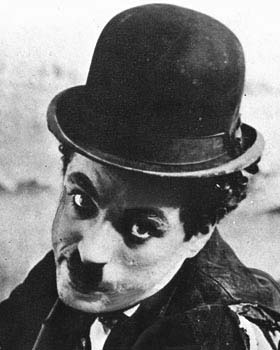
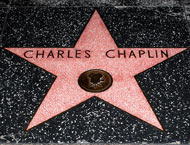
A pioneer of 20th century movie-making, Charlie Chaplin became part of the world's comic folklore in a film career that spanned 52 years. He was the industry's first superstar—thanks to the endearing charm and spirit of the Tramp—as well as one of the great comic geniuses of the century.
Chaplin was the first to blend comedy and pathos into an art form, drawing on his impoverished childhood in south London and his upbringing in the sanctuary of the music hall.
Chaplin's artistic maturity began during the years of 1916-17. The dozen two-reelers he made during that time gave him his first taste of complete freedom. Chaplin made 75 films, most of them shorts, between 1914 and 1931. Although some films before 1930 stand out, the time after 1930 is considered by critics his "great period."
There's probably no better example of laughter and tears than in "City Lights," Chaplin's luminous masterpiece from 1931. It was two years in the making, as he had to contend with the death of his mother, a stifling writer's block that halted production for a few weeks, and the emergence of sound. Yet the director triumphed magnificently with this comedy romance in pantomime.
After abandoning the Tramp and silents, Chaplin concentrated even more heavily on political issues—both publicly and creatively—a development that eventually led to his expulsion in the 1950s.
Never an American citizen, he refused to testify about his alleged communist affiliations before the House Committee on Un-American Activities. Demands were made for his deportation, and he was denied reentry into America after attending the London premiere of "Limelight" in 1952. He didn't come back until 1972, when he was awarded an honorary Oscar.
But a decade earlier he redefined comedy with two darkly satiric gems: "The Great Dictator" (1940), in which Chaplin daringly explores his most intriguing personal paradox — his compassion and his tyranny; and "Monsieur Verdoux" (1947), which is about the Holocaust.
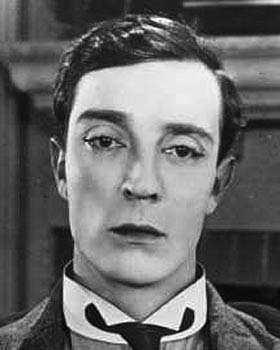
Buster Keaton, his closest rival, classified Chaplin as "the greatest motion picture comedian of all time."
Related stars
|
|
Points of interest
Academy Awards
| Year | Category | Work | |
|---|---|---|---|
| 1927 | Special Award | The Circus | Win |
| 1940 | Best Actor | The Great Dictator | Nomination |
| 1940 | Best Original Screenplay | The Great Dictator | Nomination |
| 1940 | Best Picture | Charles Chaplin | Nomination |
| 1947 | Best Original Screenplay | Monsieur Verdoux | Nomination |
| 1971 | Honorary Award | Win | |
| 1972 | Best Original Dramatic Score | Limelight | Win* |
Five thoughts about Charles Chaplin
Share a thought about Charles Chaplin