Robert Taylor
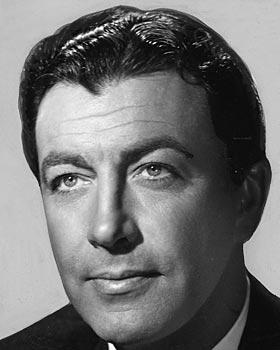
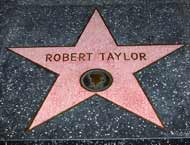
Robert Taylor's 35-year career in film and television included starring roles alongside Greta Garbo and Elizabeth Taylor and replacing Ronald Reagan on the hit television series "Death Valley Days."
His career began in 1934, when he played the juvenile lead in "Handy Andy." Fresh from acting classes at Pomona College, he became an almost-too-handsome leading man in the Metro-Goldwyn-Meyer epics of the 1930s. In later years, as his face grew lined and his hair less wavy, he became a hero of rugged action films.
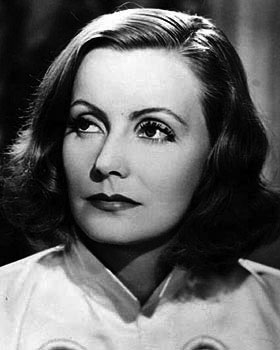
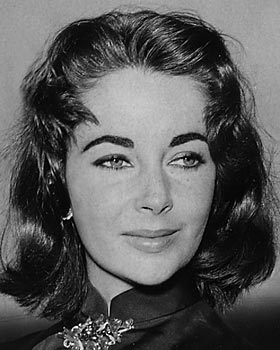
Taylor made more than 70 films. Among them were "The Magnificent Obsession" in 1935, "Camille," which he made with Garbo in 1936, and "Ivanhoe," which he made with Elizabeth Taylor in 1951. He was also a tough policeman in the 1959-62 TV series "The Detective" and in 1966 took over Reagan's role as narrator and sometimes star of segments of the "Death Valley Days" series.
Taylor was born Spangler Arlington Burgh in Filley, Neb., in 1911. He first attended Doane College in Crete, Neb., but later transferred to Pomona College.
In 1932, he was playing Captain Stanhope in a school production of "Journey's End." There was an MGM talent scout in the audience, who asked Taylor if he'd like a $35-a-week job learning about acting at the MGM drama school that offered a chance to play some parts in MGM movies.
In his early days, Taylor was usually cast as a matinee-idol type in pictures appealing to women. MGM saw the error of the typecasting and, in 1938, put him in more masculine parts.
Taylor's career boomed. In the era of big stars — Clark Gable, Spencer Tracy, Joan Crawford and Jean Harlow — Taylor was playing opposite the top actresses and earning $5,000 a week.
Taylor was under contract at MGM from 1934 until 1958, a record in Hollywood. His biggest years were those around 1940 and those around 1950.
During World War II, he was a Navy flier and a director of training films. He served almost three years as a lieutenant. After World War II, his career caught on again in 1951 when he starred in "Westward the Women" and "Quo Vadis."
It was also in 1951 that Taylor divorced his first wife, Barbara Stanwyck. In 1954, he married actress Ursula Thiess. Taylor and Thiess had two children.
He lived quietly for several years in the 1950s. He said he wasn't proud of some of the films he made after he left MGM in 1958, but he kept on working.
Taylor, a lifelong smoker, first suffered lung trouble in 1968. He died at St. John's Hospital in Santa Monica in 1969. Reagan delivered the eulogy at his funeral.
Related stars
|
|
Seven thoughts about Robert Taylor
Share a thought about Robert Taylor